
Here’s Why That Should Change How You Show Up on the Platform.
Let me tell you something that might shift the way you think about your next LinkedIn post.
It is no longer just a status update. It is no longer just a thought leadership flex. And it is definitely not something only your connections see.
Your LinkedIn content may now be influencing what AI tools tell people about your industry. About your competitors. And potentially, about you.
A 2025 study from Semrush analyzed 325,000 prompts across ChatGPT, Google AI Mode, and Perplexity. What they found was surprising, even for those of us who live in this space: LinkedIn has become the second most cited domain by large language models, right behind Reddit.
Read that again.
Not Wikipedia. Not Forbes. Not some obscure government database. LinkedIn.
The platform most business owners treat as a digital Rolodex is quietly becoming one of the most important knowledge sources AI systems pull from when generating answers.
Why AI Systems Love LinkedIn Content
This makes more sense than you might think.
AI models are designed to generate credible, helpful answers. They need content that sounds like it comes from someone who actually knows what they are talking about. And LinkedIn, by design, is full of exactly that.
Think about what lives on LinkedIn compared to other platforms. You get real professional experience shared in the first person. You get structured takes on industry-specific topics. You get people explaining their work, their lessons, and their expertise in plain language.
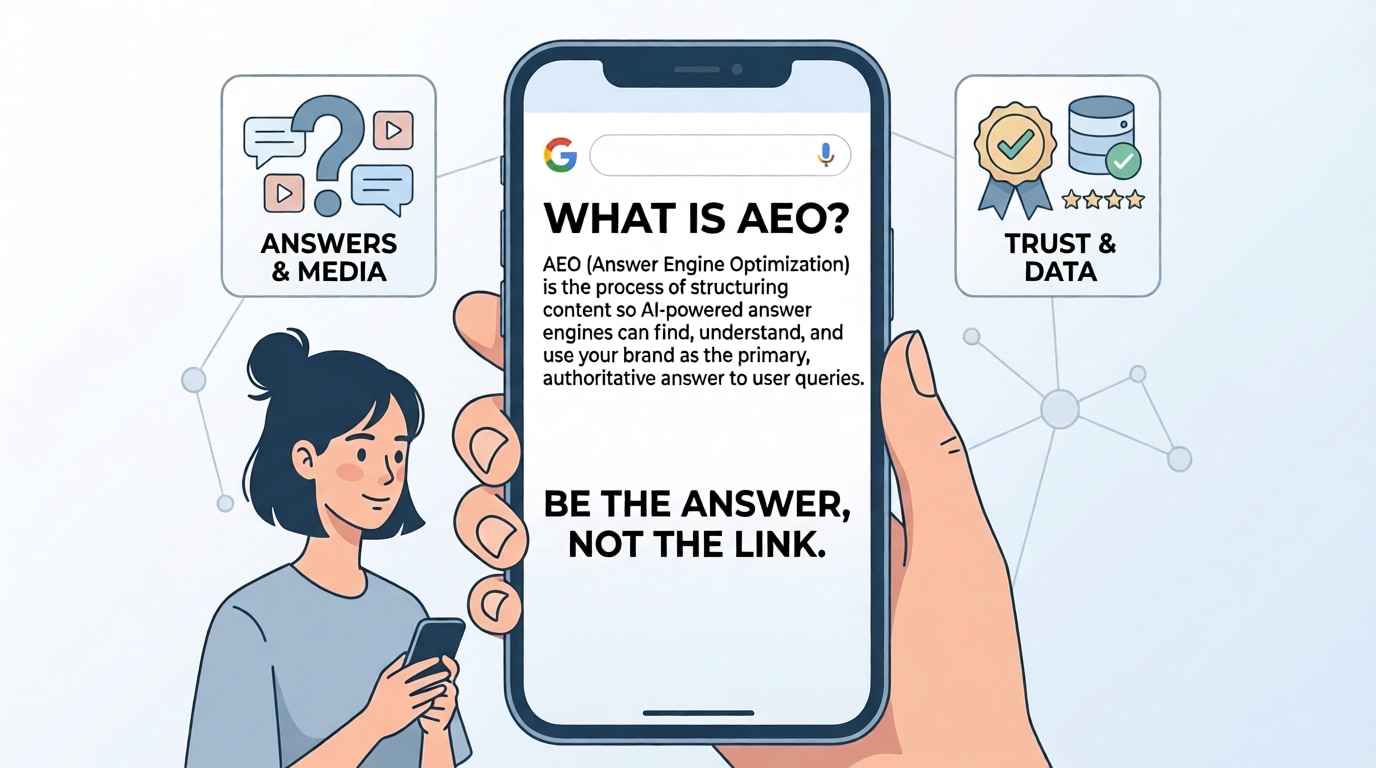
That is exactly the kind of content AI systems are built to prioritize, which is why many businesses are now thinking more intentionally about their AI content strategy on platforms like LinkedIn. Not keyword-stuffed blog posts. Not surface-level listicles. Content that reads as if it came from a professional who has done the work.
Which brings up an uncomfortable question for a lot of business owners:
If AI tools are pulling from LinkedIn to explain your industry, are they pulling from your content… or your competitor’s?
What This Actually Means for Your Business
Most companies still treat LinkedIn like a networking app. Post a company update here. Share a job listing there. Maybe drop a congratulatory comment on someone’s promotion.
That is fine. But it is also a missed opportunity that grows more expensive by the month.
Here is what is actually happening behind the scenes. When someone asks ChatGPT, Perplexity, or Google’s AI Mode a question about your field, the system assembles its answer from content it deems authoritative. And increasingly, that content lives on LinkedIn.
So when a potential client asks an AI tool, “What should I look for in [your service]?” or “How does [your process] work?”, the answer might be built from someone else’s LinkedIn post. Someone who showed up consistently. Someone who took the time to explain what they know.
The businesses that contribute to this ecosystem get referenced. The ones that stay quiet get overlooked. Is it that straightforward?
The Businesses That Will Win AI Discovery
Here is who gets cited by AI tools: the people and companies that consistently publish useful, specific, expertise-driven content.
Not viral hot takes. Not motivational quotes over sunset photos. Actual insights from people who do the work.
The type of content that performs well for AI discovery includes things like breaking down a complex topic in your industry so a non-expert can understand it, answering the real questions your clients ask before they hire you, sharing lessons from projects, outcomes, or case studies (without giving away confidential details), and explaining how a process works from start to finish in clear, structured language.
When this kind of content exists on your LinkedIn profile or company page, AI systems can find it, parse it, and reference it. When it does not exist, the model simply pulls from someone else in your space.
There is no penalty for silence. But there is a growing reward for showing up.
A Simple LinkedIn Strategy for the AI Era
If you are a business owner reading this and thinking, “Okay, but what do I actually post?”, here is a framework that works. It is not complicated. It just requires consistency and a willingness to share what you know.
Post educational content on a regular cadence
You do not need to post every day. But showing up two to three times per week with something genuinely useful trains both the algorithm and AI systems to see you as a consistent source. Write about what you know from doing the work, not what you think will get likes.
Answer the questions your clients actually ask you
Those questions your team hears on every sales call or consultation? Those are the same questions people are typing into AI tools. If you answer them publicly on LinkedIn, you create a direct pipeline between your expertise and the AI models looking for answers.
Write in clear, structured language
AI models parse content more effectively when it follows a logical structure. Short paragraphs, clear headers (in articles), and direct answers all make your content more likely to be referenced. This is not about dumbing things down. It is about being clear enough that both humans and machines can follow your point.
Build visible authority around your specific niche
Generalist content gets lost. But when you consistently publish about a defined area of expertise, AI systems (and people) start associating you with that topic. Over time, this builds a compounding advantage that is very hard for competitors to replicate.
The Bigger Picture: Your Content Is Now Infrastructure
This is the shift that most business owners have not caught yet.
Your content used to be marketing. Now it is infrastructure. It is part of the information layer that AI systems rely on to answer questions about your entire industry.
Every thoughtful LinkedIn post, article, or comment you publish has the potential to shape how AI explains your field. That is not an exaggeration. That is what the data shows.
And the businesses that figure this out early will have a massive head start. Because once AI models learn to cite your content as a trusted source, you are not just ranking in search results. You are embedded in the answers themselves.
Frequently Asked Questions
Q1: Do LinkedIn posts really affect what AI tools recommend?
A: Yes. According to research from Semrush, LinkedIn is the second most cited domain by large language models, including ChatGPT, Google AI Mode, and Perplexity. Content published on LinkedIn is actively used by these systems to generate answers to professional and business-related queries.
Q2: What kind of LinkedIn content gets picked up by AI?
A: AI models prioritize content that demonstrates genuine expertise, answers specific questions directly, and is written in clear, structured language. Posts that break down industry topics, share real professional experience, or explain processes in plain language tend to perform best for AI discoverability.
Q3: How often should I post on LinkedIn to build AI visibility?
A: Consistency matters more than volume. Publishing two to three high-quality, educational posts per week gives AI systems enough content to recognize your profile as a credible, recurring source of expertise. A single viral post will not have the same long-term impact as steady, useful content over months.
Q4: Can a small business compete with larger brands on LinkedIn for AI citations?
A: Absolutely. AI systems do not necessarily favor large brands. They favor content that directly answers questions with specificity and authority. A small business owner who consistently publishes expert-level insights about their niche can be cited just as frequently as a Fortune 500 company. The key is depth and consistency, not budget.
Q5: Does this mean LinkedIn is more important than my website for SEO now?
A: Not exactly. Your website remains critical for traditional search engine optimization. But LinkedIn is emerging as a parallel discovery channel, specifically for AI-generated answers. The strongest strategy is to have both a well-optimized website and an active LinkedIn presence that reinforces your authority. They work together.
Ready to Show Up Where AI Is Looking?
At Brand Growth Studio, we help businesses build the kind of expertise-driven content strategy that increases visibility across traditional search and AI discovery. Because in the next phase of the internet, the businesses that teach the market are the ones AI will cite.
Let’s build your content strategy for the AI era. Reach out to Brand Growth Studio to get started.
About the Author
Erika Powers is the founder of Brand Growth Studio, a digital marketing agency specializing in GEO, AI discoverability, and authority-building content strategies for service-based businesses. With years of experience helping business owners grow their online presence, Erika and her team focus on creating content ecosystems that perform in both traditional search and the emerging AI landscape.